














“Cold storage is the most expensive cubic foot in your network.” And when labor is tight, the simplest question can stall a shift: What do we have—and where is it? Every time an operator disappears into the freezer to hunt a “lost” pallet, the meter starts running—on time, on energy, and on risk.
Cold changes the work. Exposure windows shrink. PPE lowers dexterity and line of sight. Transitions between zones fog lenses and soften labels. Capable people end up doing hurried counts and partial audits because that’s what the environment allows. Planning absorbs the uncertainty with bigger safety stocks and wider reorder points—cash literally parked in the cold.
What happens when you flip the equation and make the freezer the most measured place in the building?
The cold compounds every inventory problem
Temperature doesn’t just make work uncomfortable; it compresses decision windows and turns small issues into operational problems.
Counting becomes an event, not a routine. Teams schedule audits around staffing and exposure limits, not actual inventory needs.
Reads slow down. Gloves and face shields cut dexterity and visibility. Moisture between ambient and cold zones turns crisp barcodes into blurred guesses.
Risk rises with time on ice. Cold environments add slip hazards, slower reaction times, and equipment variability—so exposure is rightly limited, which means counts happen less often than they should.
Infrequent counts allow discrepancies to compound. To cope, operations add “just-in-case” inventory—exactly where it’s most expensive to hold
What autonomous scanning changes
Autonomous scanning in cold storage isn’t about replacing people. It changes what gets measured, how often, and at what cost.
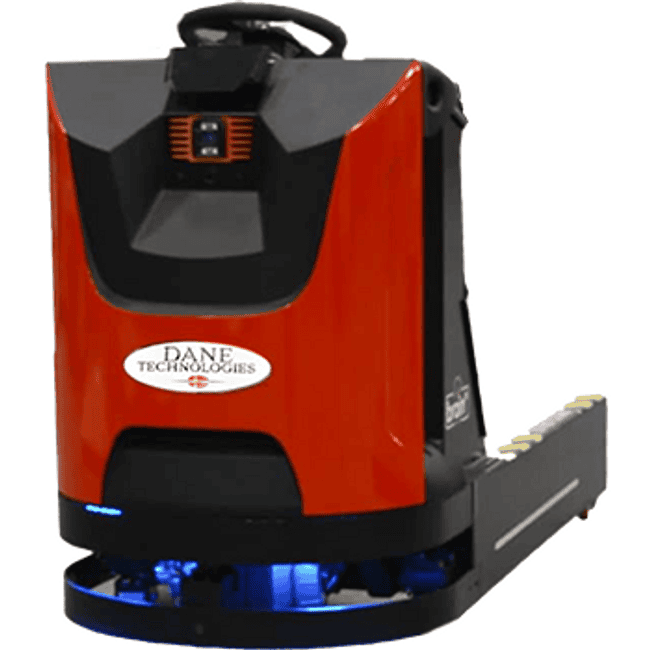
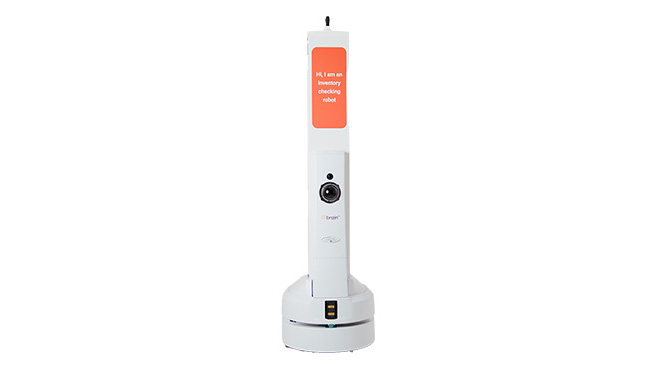
Dane AiR™ DC—an autonomous inventory robot—operates reliably at -20°F and above. It doesn’t need breaks or PPE and isn’t affected by cold stress. You set the schedule—nightly, by shift, or during low-traffic windows—and it delivers consistent data regardless of staffing constraints.
This shifts inventory verification from an event to a background process. Instead of scheduling a team to suit up and scan aisles, you get exception reports that identify specific problems: mis-slotted pallets, unreadable labels, WMS mismatches, date/lot issues.
The difference between exceptions and searches is where most operational improvements appear first. Less time spent hunting and targeted fixes instead of broad audits.
How It changes the work
Dane AiR™ DC helps reduce low-value cold exposure—the searches, the verification scans, the “let me just check” trips that add up across a shift.
When the Dane AiR™ DC handles routine verification, associates spend time on higher-value work: moving product, resolving flagged exceptions, managing inbound receipts. Putaway confirms faster because location accuracy improves. Morning picks encounter fewer surprises because overnight scans already surfaced discrepancies. You’re now validating as part of the regular scan pass, not standing up separate audits that require cold time and coordination.
Over time, as on-hand inventory becomes more accurate, planners can trim safety buffers. Enabling you to stop adding inventory to cover uncertainty that no longer exists.
What cold-ready actually means
Battery performance at Low temperature
Batteries lose capacity in extreme cold. The Dane AiR™ DC uses lithium ferrous phosphate (LiFePO) batteries designed to better maintain performance in freezer conditions.
Optical performance in frost and low light
Dane AiR™ DC integrates Cognex DataMan barcode scanners that maintain read accuracy in challenging conditions—frosted labels, high-bay lighting, narrow aisles.
Safe navigation
Freezer floors can be slick. The Dane AiR™ DC uses BrainOS autonomous navigation with 3D LiDAR and computer vision to handle mixed traffic, narrow aisles, and varying traction conditions without human intervention.
Thermal transition capabilities
Moving through temperature zones introduces condensation. The Dane AiR™ DC accounts for this with environmental adaptation features so lenses don’t fog and reads don’t fail when shifting from ambient to cold locations.
Direct WMS integration
Exception data from Dane AiR™ DC integrates seamlessly into the WMS.
Learn how the Dane AiR ™ DC handles freezer operations at 0°F and above. Contact us for a site and ROI assessment tailored to your cold storage environment.
