













The market for autonomous mobile robots (AMRs) has historically been crowded with promises that look incredible on a PowerPoint slide or in a highly controlled demonstration environment.
However, operations leaders know that controlled environments do not ship pallets. True facility operations are dynamic, high-volume ecosystems with tight margins, where any disruption can cascade into massive delays.
You are constantly balancing throughput goals with labor constraints, meaning you cannot afford to implement technology based on theoretical performance. You need hard, undeniable proof.
Automation Accountability
At Dane Technologies, we don’t ask you to trust a simulation. We ask you to trust your own operational data.
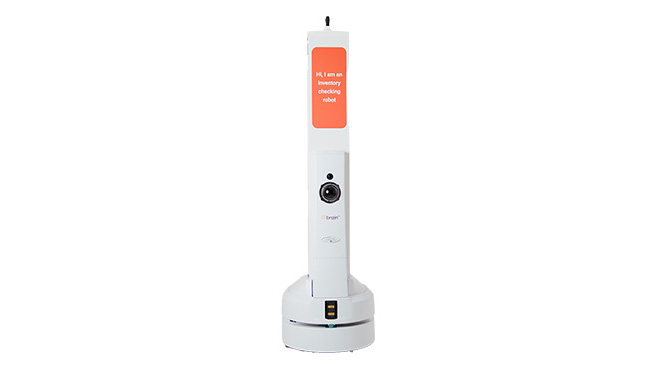
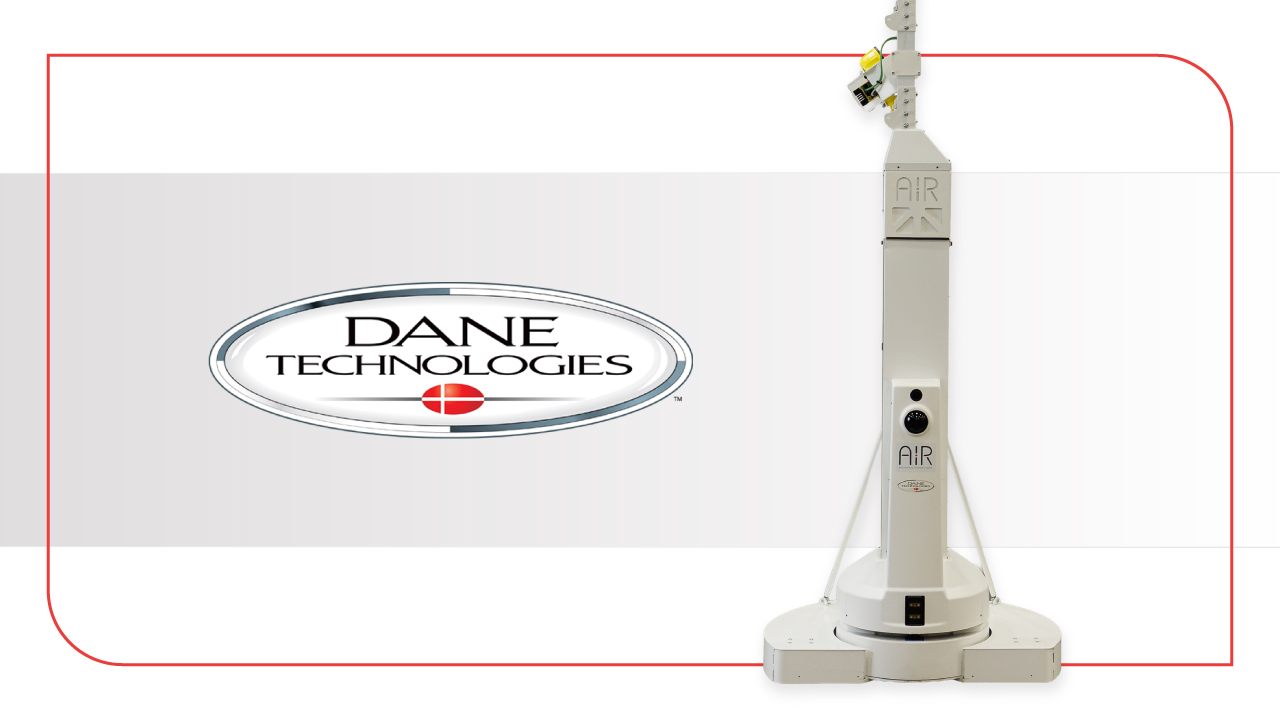
We build intelligent systems like the Dane AiR™ DC specifically for the realities of live warehouse environments, and we actively invite the highest levels of scrutiny from our partners.
If a robotics solution cannot prove its financial and operational utility within your actual facility, it does not belong there.
Step #1: Establish a Granular Operational Baseline
You cannot validate ROI if you do not know exactly what your current processes cost. Before introducing an automation solution like the Dane AiR™ DC to your facility, you must document your current state with extreme precision.
This baseline must be directly tied to the specific workflows the automation is designed to address, such as manual cycle counting, exception handling, or inventory reconciliation.
Comprehensive Cost Analysis
A superficial look at hourly labor rates will not suffice. You need to calculate the fully loaded cost of your manual processes, including the downstream financial penalties of inaccuracy — such as safety stock inflation, expedited shipping for mis-picks, and the operational drag of phantom inventory.
The validity of your final ROI evaluation hinges entirely on how granular and thorough you are during this stage. Lock these numbers in. They are the definitive standard against which the pilot program will be judged.
Step #2: Define Non-Negotiable Success Metrics
A live pilot deployment must be governed by strict, predefined Key Performance Indicators (KPIs) to prevent scope creep or shifting success criteria. Collaborate with operations and finance stakeholders to establish clear Service Level Agreements (SLAs) for the pilot.
Will the evaluation be deemed successful if it achieves a 40% reduction in manual cycle count hours while maintaining a 99% scanning accuracy rate?
If these operational benchmarks are left ambiguous, the resulting ROI calculations will lack the rigor needed for enterprise-wide scaling.
Step #3: Deploy via Live Integration
To validate true ROI, the automation must be deployed directly into your existing physical layout during operational hours.
The system must navigate variable aisle traffic, interact safely with material handling equipment (MHE) and human associates, and adapt to your facility without requiring extensive infrastructure or operational modifications.
If deploying the system successfully involves making significant changes to the physical architecture of your location, these are unrecorded capital expenditures that will silently erode your ROI.
Step #4: Execute the Live Validation Matrix
Once the system is deployed and operating autonomously, rigorous measurement begins. Dane Technologies offers automation solutions that integrate directly into your existing tech stack, and you should pull performance data straight from your own Warehouse Management System (WMS) or Enterprise Resource Planning (ERP) platform to ensure total objectivity.
Focus your daily evaluation on these specific operational pillars:
- Throughput Velocity: Track the precise increase in units processed or pick-face locations scanned per hour compared to your baseline.
- Labor Reallocation: Measure the reduction in manual hours dedicated to baseline tasks. Track where that labor is redirected—such as reassigning staff from inventory audits to outbound fulfillment—to capture the newly generated operational value.
- Targeted Discrepancy Detection: Track the system’s ability to identify localized inventory mismatches, unexpected empty bins, or misplaced items within a specific pilot zone.
- System Autonomy: Track the frequency of required human interventions or fault-recovery tasks, as any manual troubleshooting incurs a labor cost that detracts from the total ROI.
Step #5: Calculate Hard ROI and Total Cost of Ownership
At the conclusion of the pilot, it is time to conduct a comprehensive financial review.
Begin with an evaluation of the total operational value generated by the system during the pilot window, looking closely at reclaimed labor hours, eliminated defect costs, and measurable throughput enhancements. Your goal is to make an accurate estimate about the financial impact of deployment at your location.
Next, subtract the Total Cost of Ownership (TCO) associated with the automated system. TCO extends far beyond the initial hardware expenditure. It should account for software licensing, ongoing maintenance agreements, integration engineering, and any facility modifications required for deployment.
Finally, take these comprehensive pilot findings and compare them directly against the granular operational baseline you established in Step 1 to determine the true, validated return on investment.
Demand Automation Certainty
Scaling automation should never be a leap of faith. By executing a live pilot and rigorously measuring the results against a granular baseline, you remove the friction and uncertainty from the decision-making process.
At Dane Technologies, we welcome this level of scrutiny from our partners. We build intelligent automation systems engineered for the reality of your floor, ready to prove their value, dollar for dollar, step by step.
About Dane Technologies
Founded in 1996, Dane Technologies is a trusted leader in autonomous mobile robotics and material handling solutions. Designed and built to thrive in complex, live environments, Dane’s intelligent automation systems—including the Dane AiR™ DC—empower operations leaders to solve critical challenges in inventory accuracy, labor efficiency, and workplace safety.
