












In the logistics and fulfillment sector, the mandate from the executive board is almost always the same. Find what works and scale it instantly.
However, seasoned operations leaders know that rolling out an enterprise-wide automation initiative on day one is not strategic. In fact, it is reckless.
Confidence at the executive level cannot be bought with a vendor roadmap or a polished pitch deck. It must be earned in the active, dynamic reality of your own facilities.
Scaling an autonomous inventory solution is only viable when it is backed by undeniable, mathematically proven success at a single site.
Validating the Baseline Before the Blueprint
Before you can standardize across a network, you must first prove the technology can flawlessly integrate into a live operation. It must do this without halting throughput, disrupting material handling equipment (MHE) traffic, or requiring massive infrastructure overhauls.
At Dane Technologies, we fundamentally agree with a conservative approach to enterprise deployment. We do not expect you to overhaul your entire network based on a theoretical promise. We expect you to pilot, validate, and measure.
We also know that once the ROI is proven, network-wide scaling transforms from a calculated risk into a competitive necessity.
The Prerequisite to Scale: Undeniable Local ROI
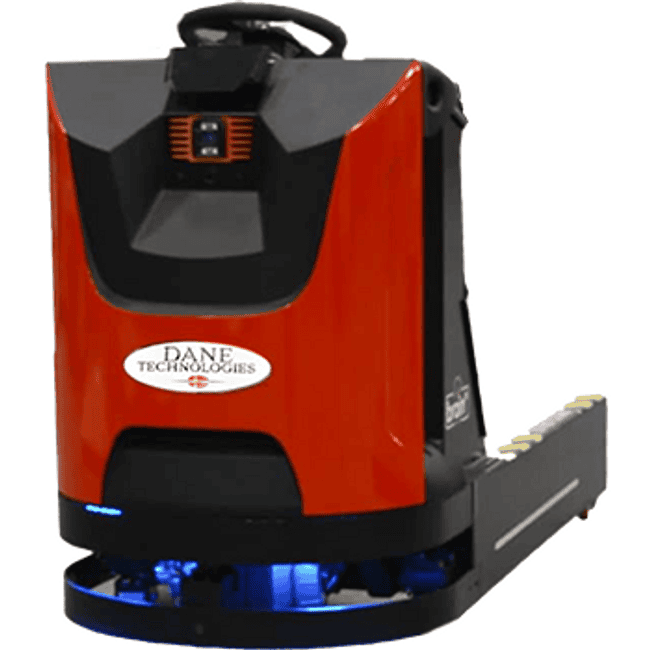
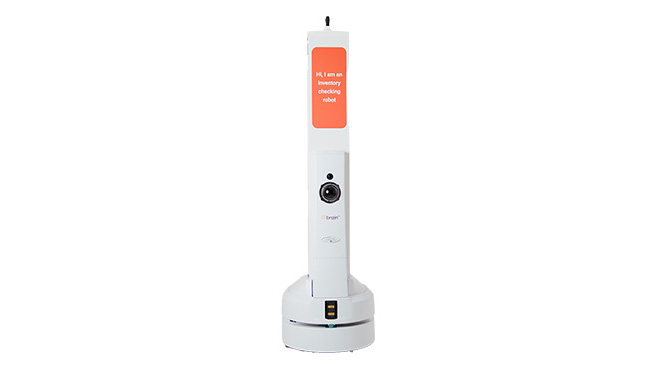
Enterprise-wide deployment of automated solutions like the Dane AiR™ DC can only happen when a pilot program has delivered rock-solid, validated ROI in one or more locations.
Executive confidence is built on hard data rather than optimistic sentiment. Did the pilot successfully eliminate the manual hours dedicated to cycle counting? Did it integrate cleanly with your existing Warehouse Management System (WMS)?
You also need to evaluate associate interaction. Did your floor teams adopt the technology seamlessly, or did they have to constantly babysit the units?
Once you have a granular baseline that proves a clear reduction in operational expenditure (OpEx) alongside a hard return on investment, you have built the ultimate business case for network-wide expansion.
The Multi-Facility Reality: No Two Locations Are Identical
The most significant hurdle to scaling automation is the cookie-cutter fallacy. Vendors often assume that if a robot works in Facility A, it will seamlessly drop into Facility B. Operations leaders know better.
Your flagship distribution center might feature wide aisles, pristine racking, and predictable Wi-Fi. In contrast, a secondary legacy site might have narrow aisles, high-velocity forklift cross-traffic, and Wi-Fi dead zones.
Executive confidence requires a technology partner whose autonomous systems are engineered to dynamically adapt to these variables.
The hardware and software of autonomous inventory robots must possess the onboard intelligence to map and navigate the challenges of different types of environments. They must do this without requiring custom-engineered infrastructure, QR grids, or bespoke programming for every single building.
The Operational Multiplier: Standardizing Your Automation Fleet
Once a pilot proves its adaptability and ROI, standardizing that specific automation process across your entire network unlocks compounding operational benefits. These benefits go far beyond localized labor savings.
- Harmonized Data Architecture. Deploying a unified autonomous inventory system across all sites accurately informs your single source of truth. Corporate WMS and Enterprise Resource Planning (ERP) systems receive standardized, real-time telemetry and inventory visibility across the entire supply chain. This eliminates localized data silos.
- Labor and Training Agility. Standardized hardware means standardized operating procedures. A warehouse manager or floor associate trained on the system in Chicago can immediately operate, troubleshoot, or optimize the system if transferred to a facility in Dallas.
- Centralized Fleet Management. A standardized rollout allows your IT and operations teams to monitor fleet health, push software updates, and optimize routing across dozens of facilities from a single dashboard. This drastically reduces localized IT burdens.
- Predictable OpEx and Support. Managing a single, proven vendor relationship across your enterprise yields economies of scale in preventative maintenance, parts procurement, and SLA enforcement.
Earning the Right to Scale
True scalability is the byproduct of undeniable quality. At Dane Technologies, our deployment philosophy is straightforward.
We earn the right to scale by proving our value on your floor first.
We build infrastructure-grade robotics designed to handle the localized complexities of a live facility. These systems generate the hard operational data your executives demand. We do not push for enterprise-wide rollouts on day one because we do not have to.
We know that once you experience the unshakeable accuracy, safety, and ROI of a successful localized deployment, scaling across your network becomes the only logical next step.
About Dane Technologies
Founded in 1996, Dane Technologies is a trusted leader in autonomous mobile robotics and material handling solutions. Designed and built to thrive in complex, live environments, Dane’s intelligent automation systems—including the Dane AiR™ DC—empower operations leaders to solve critical challenges in inventory accuracy, labor efficiency, and workplace safety.
