
















The True Cost of Inventory Blind Spots in Complex Operations
A critical order enters the queue. The warehouse management system (WMS) indicates a high-priority pallet is located in Aisle 4, Bin B.
A material handler arrives at the designated coordinates, only to find an empty slot, or the wrong pallet.
In complex logistics, this is not a theoretical anomaly. It is a real, ongoing, and systemic point of failure. Maintaining inventory accuracy in a high-velocity environment is non-negotiable.
The mandate is clear: maximize throughput and prioritize safety without inflating labor costs or adding friction to the floor. In a high-pressure facility, a single missing pallet can create massive disruptions in any operation.
When you operate on razor-thin margins, your tolerances are simply too tight for missing assets.
The Cascading Financial Impact of Inventory Confusion
Many organizations mistakenly calculate an inventory error as a static metric—the flat value of the misplaced goods plus the immediate labor hours spent recovering them. However, from an operational and engineering perspective, the true financial impact is compounding and highly destructive.
When a discrepancy occurs, the inefficiency propagates immediately across the operational ecosystem.
Consider the lifecycle of a single lost pallet:
- First-Degree Cost: Labor Inefficiency. Multiple personnel are diverted to conduct manual searches. This is a direct misallocation of human capital, pulling skilled workers away from critical, revenue-generating fulfillment tasks.
- Second-Degree Cost: Throughput Degradation. Because the required assets cannot be located, the operation stalls. Upstream and downstream processes lose their synchronization, injecting latency that ripples across the entire shift.
- Third-Degree Cost: Process Workarounds and Penalties. To circumvent the missing pallet, teams could be forced to cannibalize alternative stock, introducing secondary inventory errors. Subsequently, the facility absorbs steep expedited shipping premiums to meet client obligations, or worse, misses the deadline and incurs strict Service Level Agreement (SLA) penalties.
- Fourth-Degree Cost: Redundant Procurement and Capital Allocation. Eventually, the system writes off the unlocated pallet as shrink, triggering an automated, redundant replenishment order. Weeks later, the original pallet is discovered misplaced in an adjacent zone. The facility has now paid twice for the same goods, unnecessarily tying up working capital and consuming critical racking capacity.
The Ceiling of Manual Redundancy
The legacy response to missing inventory has been to deploy additional manual labor for cycle counting. Mathematically and operationally, this approach has reached its absolute ceiling.
Manual cycle counting—often done at dangerous heights or in freezing temperatures—is slow, hazardous, and highly susceptible to human error.
Focus naturally degrades over a long shift, making it impossible to achieve the continuous precision modern supply chains demand. You simply cannot bridge a systemic data gap by relying on human endurance.
Furthermore, securing and retaining labor for repetitive, physically demanding tasks is becoming unsustainable.
Hiring more cycle counters isn’t a viable solution. It’s a temporary stopgap that ends up further entrenching a fundamentally flawed methodology.
Bridging the Automation Trust Gap
Operations leaders know they need automation, but capital projects often stall out long before deployment. This is because the market has been flooded with vendors selling conceptual technology that only works in perfectly illuminated, sterile test labs.
Live operational floors aren’t sterile. They have cracked concrete, variable lighting, and high-traffic aisles where autonomous systems have to safely interact with forklifts and human workers.
Executives demand hard ROI data, and no seasoned operations leader is going to risk their operation—or their career—on a “science project” that disrupts the live floor.
They are fatigued by endless beta phases. They need hardened technology that delivers undeniable, real-world results.
Redefining the Objective
Modern facility management requires operational certainty at scale. Your infrastructure must evolve from a reactive cost center into a predictable, intelligent ecosystem.
To eliminate the compounding costs of inventory blind spots, organizations need solutions that integrate cleanly into existing architectures. These systems must perform with unwavering consistency and validate their financial utility on the live floor before scaled deployment is ever considered.
Accuracy, uptime, and safety are strictly non-negotiable parameters.
The era of theoretical automation is over. The future of inventory visibility belongs to purpose-built, intelligently engineered solutions designed to thrive in the demanding reality of your operation.
About Dane Technologies
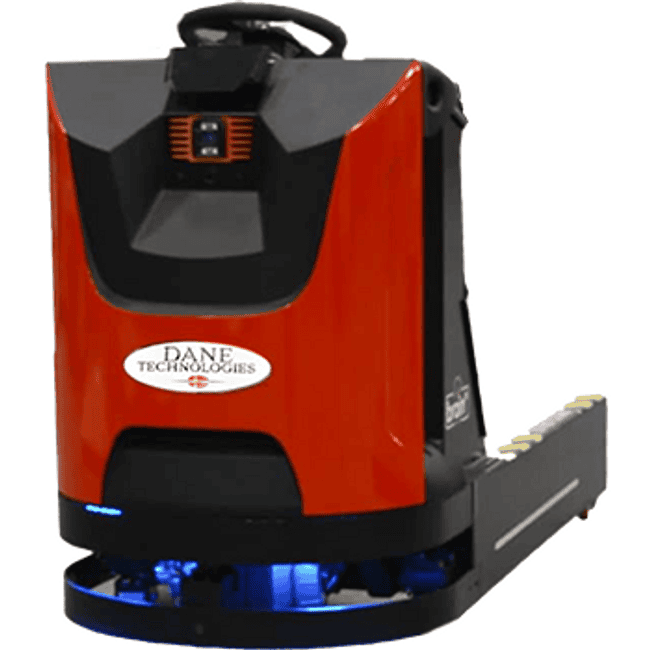
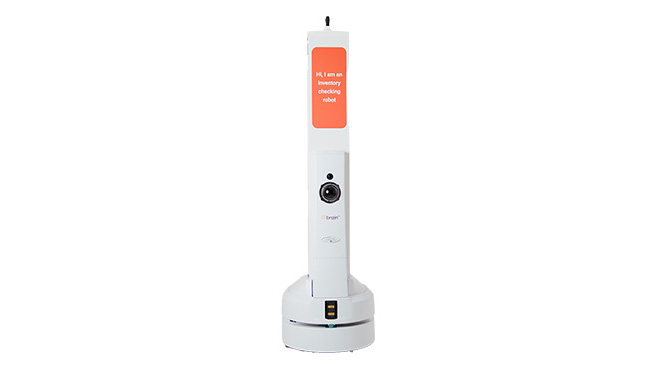
Founded in 1996, Dane Technologies is a trusted leader in autonomous mobile robotics and material handling solutions. Designed and built to thrive in complex, live environments, Dane’s intelligent automation systems—including the Dane AiR™ DC—empower operations leaders to solve critical challenges in inventory accuracy, labor efficiency, and workplace safety.
